That transformation isn't simple. Many OEMs and fabricators struggle to find partners who can hold tight tolerances on custom-formed mesh shapes without tearing wires, distorting stitches, or losing the porosity the part was designed around. Get it wrong, and you've got a demister pad that lets liquid slip past, or a gasket that fails an EMI test.
This article covers the core forming and stamping methods, the step-by-step production process, material selection, and what to look for in a manufacturing partner.
Key Takeaways
- Forming turns flat wire mesh into functional 2D/3D parts: discs, cones, cylinders, gaskets, and filter elements
- Corrugating, calendering, die forming, and press stamping each suit different geometries and production volumes
- Material, wire diameter, and heat treatment drive dimensional stability and forming performance
- Knitted mesh’s loop structure delivers stretch and elastic recovery rigid welded mesh can’t match
What Is Wire Mesh Forming and Stamping?
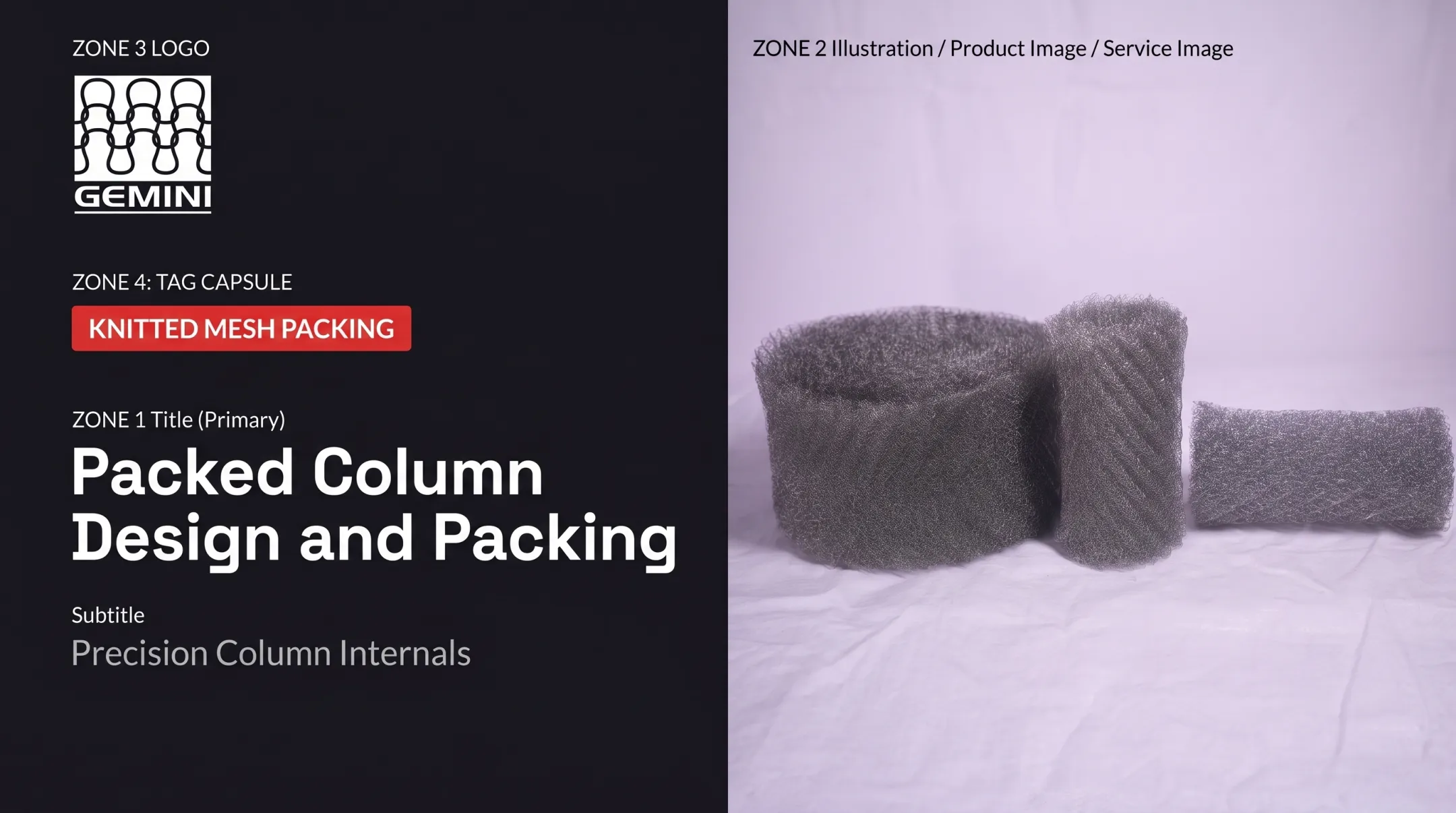
Wire mesh forming is the process of converting flat mesh sheets or rolls into a specific shaped component while preserving the underlying structure. For knitted mesh specifically, this means flattening, corrugating, calendering, compressing, or die-forming a continuous strand of interlocking loops — not cutting sheet metal.
Stamping, by contrast, is a press-and-die operation that cuts and shapes material in a single stroke. That's the standard definition used in conventional sheet-metal work. Applied to mesh, the term gets used loosely, but true die-forming of knitted mesh compresses the loop structure into a fixed geometry rather than punching a blank.
The distinction that matters for buyers:
- Forming = bending, corrugating, or compressing mesh into a 3D shape
- Stamping = cutting and shaping in one press stroke, more common with woven or welded mesh
Forming is essential for demister pads, filter elements, gaskets, and EMI shielding components.
Why Knitted Mesh Forms Differently
Knitted mesh is built from interlocking loops that move relative to each other in-plane, giving it two-way stretch. That elasticity means it can be pulled, compressed, and shaped into curved or irregular geometries that rigid welded mesh simply cannot follow without cracking.
Gemini's knitted mesh, for example, is engineered with up to 300% stretching capacity, which opens up shapes woven or welded constructions can't reach.
Core Forming and Stamping Techniques
Different geometries call for different tooling. Here's how the main routes break down:
| Technique | How it works | Best for |
|---|---|---|
| Die forming / Punch-and-die | Matched tooling cuts and shapes mesh in one pass | High-volume flat or slightly contoured parts |
| Corrugating | Mesh runs through corrugating rollers, adding spring-like resilience and thickness | Demister pads, cushioning elements |
| Calendering | Rollers compress and flatten mesh into controlled-thickness strip | Gasket stock, seal material |
| Deep drawing | Mesh is stretched over a die cavity into deep 3D shapes | Cups, cones, complex vessels (often needs pre-annealing) |

Roll forming and stretching take advantage of knitted mesh's elongation. The loop structure returns toward its original shape as long as stress stays below the yield point. Well-controlled forming produces continuous shapes like tubes and gaskets without permanent deformation.
Heat Treatment Before Forming
Annealing relieves internal stress in the wire before it's formed. Skip this step, and you risk springback: the part relaxes back toward its original flat shape after tooling releases it.
ASTM A580/A580M, the standard covering stainless wire, lists annealed and cold-worked conditions as standard supply forms. Wire temper and forming behavior are tightly linked. ASTM's specification confirms annealing isn't optional for parts that need dimensional accuracy.
Common Defects and How Tooling Prevents Them
In knitted mesh forming, the usual defects are mis-shaped stitches and damaged or broken wires, not the tearing or wrinkling common in sheet-metal stamping. Manufacturers catch these with light-table inspection and, on high-volume runs, automated dimensional imaging.
Proper die pressure calibration and a forming recipe matched to the wire temper stop both defects before final inspection.

Step-by-Step Wire Mesh Forming Process
Turning a spec sheet into a finished part follows a consistent sequence:
- Design and prototyping: Engineers translate mesh count, wire diameter, and density requirements into a formable design, confirming the geometry is achievable within the mesh's stretch limits.
- Material preparation: Mesh rolls are cut into blanks sized for the tooling. Gemini's rolls, for instance, run in standard 30-meter lengths with widths from 25 mm to 1,000 mm.
- Forming/stamping execution: The press or die applies controlled force to shape the blank into final geometry.
- Trimming and finishing: Edges are trimmed, deburred, and dimensionally checked.
- Quality control: Porosity, density, and dimensional accuracy are verified before the part ships.

Manufacturers operating under ISO 9001:2015 build these checks into a documented quality management system rather than leaving them to spot checks. Per ISO's own standard, that certification defines how a QMS is established and continually improved. Treat it as a process commitment, and confirm it alongside actual inspection records for the specific part.
Material and Design Considerations for Formed Mesh Parts
The wire material you choose determines formability, corrosion resistance, and how the part behaves in service:
- SS304 — general-purpose stainless, good corrosion resistance and formability, solid default for most industrial environments
- SS316 — adds molybdenum for higher corrosion resistance in aggressive chemical or marine environments, while retaining strong forming characteristics
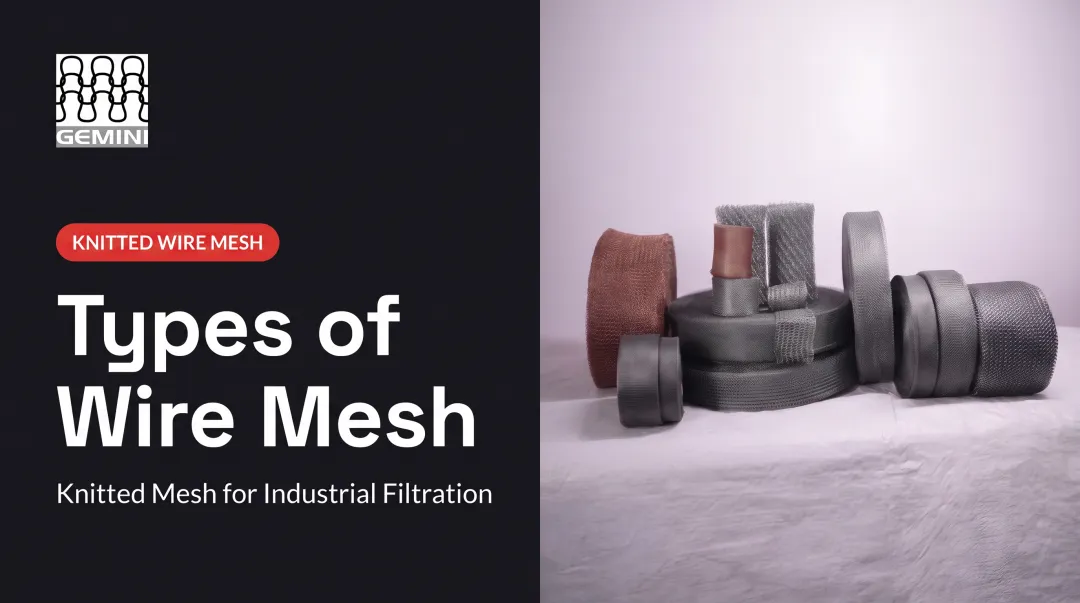
- Copper — highly malleable, easily formed, excellent conductivity, but corrosion compatibility needs separate verification for the specific media
- PEEK and polymers — used where stainless fails under chemical aggression; flexible, thermally stable, and chemically resistant, though few suppliers knit polymer mesh to a tight spec in small runs
Porosity control is where design decisions get expensive if they're wrong. Void volume can range from near-0% up to over 98%, directly affecting flow rate and filtration efficiency. Gemini's knitted mesh products, for example, cover this range through post-knitting density, thickness, and flattened-or-crimped configuration, not just the knitting pattern itself.
Specify mesh density and stretch tolerance upfront. Redesigning mid-production because a spec was assumed rather than confirmed is the most common (and most avoidable) cost overrun in custom mesh projects.
Industry Applications of Formed and Stamped Wire Mesh
Formed and stamped knitted mesh shows up wherever separation, shielding, or insulation geometry gets complicated:
- Oil & gas and petrochemical — Demister pads fitted to any separator vessel shape, removing entrained liquid from gas streams
- Filtration and process equipment — Custom-formed filter elements and mist eliminators for gas/liquid separation
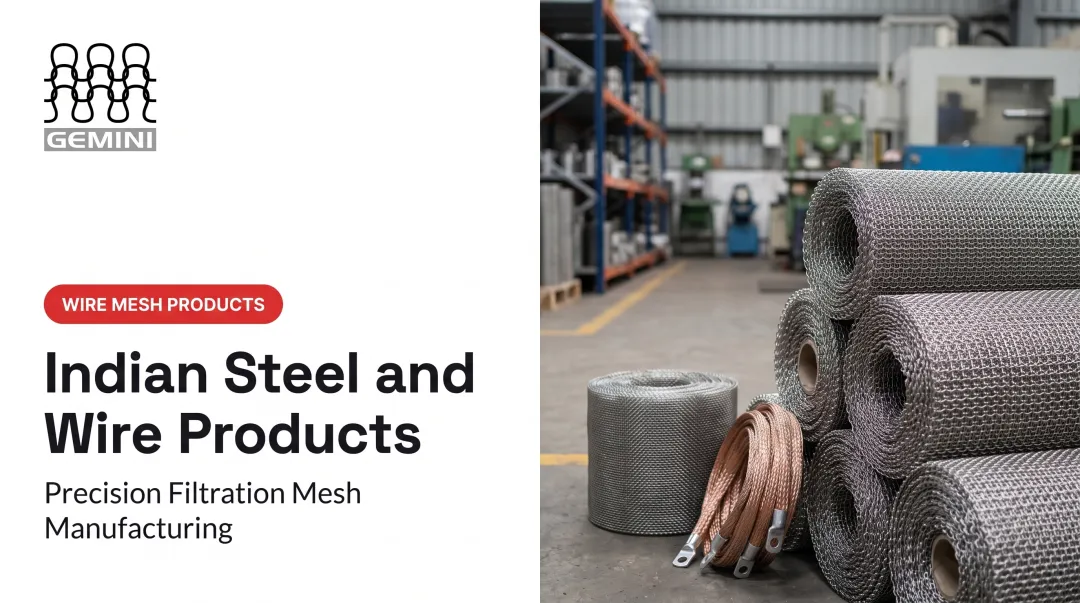
- Electrical and EMI shielding — Compressed mesh gaskets in rectangular or custom shapes, paired with tinned copper braided connectors for grounding
- Insulation and industrial fabrication — Knitted mesh facings embedded into removable insulation blankets, supplied flattened or crimped

Each application demands a different acceptance test. A demister pad is judged on droplet separation and pressure drop; an EMI gasket on compression, contact, and shielding performance.
The forming mechanism might be similar, but the spec sheet isn't interchangeable.
Choosing the Right Wire Mesh Forming Partner
Not every mesh supplier can hold tolerance on a complex formed part. These checks separate a reliable partner from a risky one:
- ISO 9001:2015 certification: confirms a documented quality system, not a vague claim of "quality mesh"
- Stretch and porosity range: up to 300% stretch and near-0% to 98% void volume for geometries most woven-mesh shops cannot form
- Logistics reliability: for US buyers sourcing internationally, proximity to major export ports cuts lead-time risk
Gemini Wiremesh, based in Mumbai with direct connectivity to Jawaharlal Nehru Port Trust (JNPT), has shipped custom knitted mesh components to global customers for over 30 years. That track record includes demister pads, compressed gaskets, shielding tapes, and braided copper connectors across more than 10,000 shipments.
Minimum orders start at 100 kg for mesh rolls or 100 pieces for filters. Wire diameter, mesh width, and porosity are specified per project.
Before you sign off, use ASQ's supplier evaluation guidance and confirm:
- Past performance on formed or tolerance-critical parts
- Quality-system documentation and production capacity vs. your schedule
- Technical support depth, not unit price alone
Frequently Asked Questions
What is the process of wire mesh manufacturing?
Mesh is produced through knitting, weaving, or welding wires into a continuous structure. From there, it's formed or stamped into finished shaped components like discs, cones, or gaskets as needed.
What is wire mesh called?
Depending on the manufacturing method, it's also known as wire cloth, wire fabric, knitted mesh, or metal mesh.
What is the difference between forming and stamping wire mesh?
Forming shapes mesh into a 3D geometry through bending, corrugating, or compressing. Stamping cuts and shapes material in a single press stroke, more typical of rigid sheet-metal processes.
Can knitted wire mesh be formed into complex shapes?
Yes. Knitted mesh's loop structure gives it high two-way stretch, making it far better suited to curved or irregular geometries than rigid woven or welded mesh.
Why is annealing important before forming wire mesh?
Annealing relieves internal stress in the wire before shaping. Without it, formed parts risk springback, where the mesh relaxes back toward its original flat shape after tooling is removed.
What industries rely most on formed wire mesh components?
Oil & gas, filtration and process equipment, electronics and EMI shielding, and industrial insulation manufacturing are the heaviest users of formed and custom-shaped mesh components.