Copper earns its place at the top of the grounding-material list for one core reason: conductivity. Copper's C11000 grade tests at a minimum of 100% IACS in the annealed condition, and 101% IACS at 68°F, according to the Copper Development Association. That's meaningfully higher than aluminum, which the International Copper Association pegs at 61% of copper's conductivity.
This guide covers what copper grounding mesh actually is, how it works, where it's used, and how to source it correctly.
Key Takeaways
- Copper grounding mesh routes fault current and static to earth on a low-resistance path, protecting equipment and personnel
- Higher conductivity than aluminum or most steels makes copper the default for critical grounding
- Highly corrosive soils or extreme cost constraints may call for alternatives like galvanized steel
- Real performance hinges on proper bonding, conductor sizing, and NEC/IEEE-compliant installation
- Custom-knitted mesh from an ISO-certified maker keeps porosity and conductivity consistent roll to roll
What Is Copper Grounding Mesh?
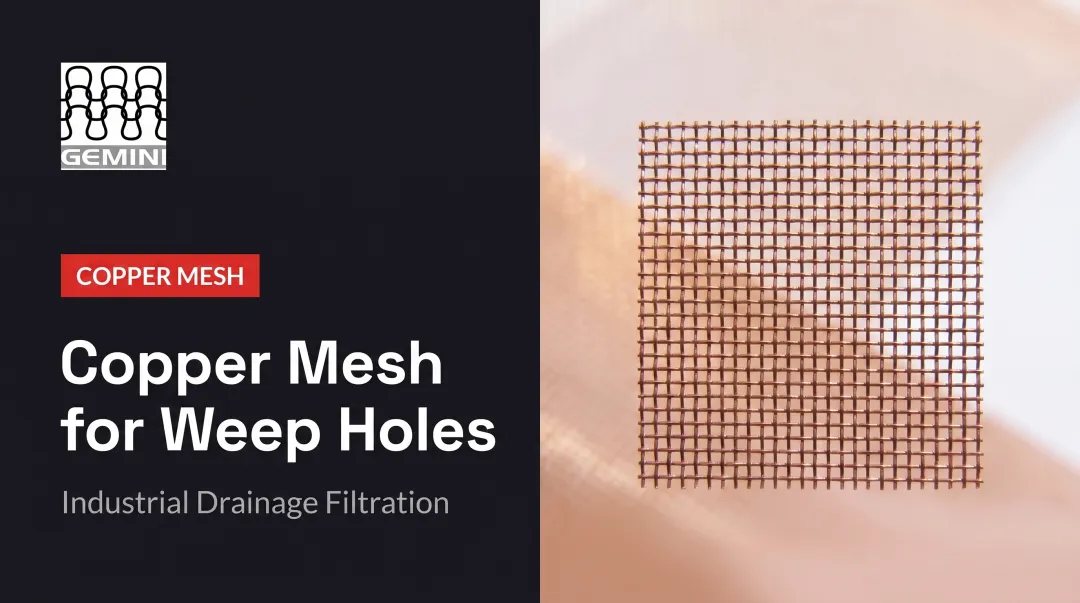
Copper grounding mesh is a knitted or woven structure of copper wire that forms a continuous conductive surface, or ground plane. It gives fault current, lightning energy, or static charge a low-impedance route to ground instead of through equipment or people.
Knitted mesh, woven mesh, and expanded copper foil aren't interchangeable:
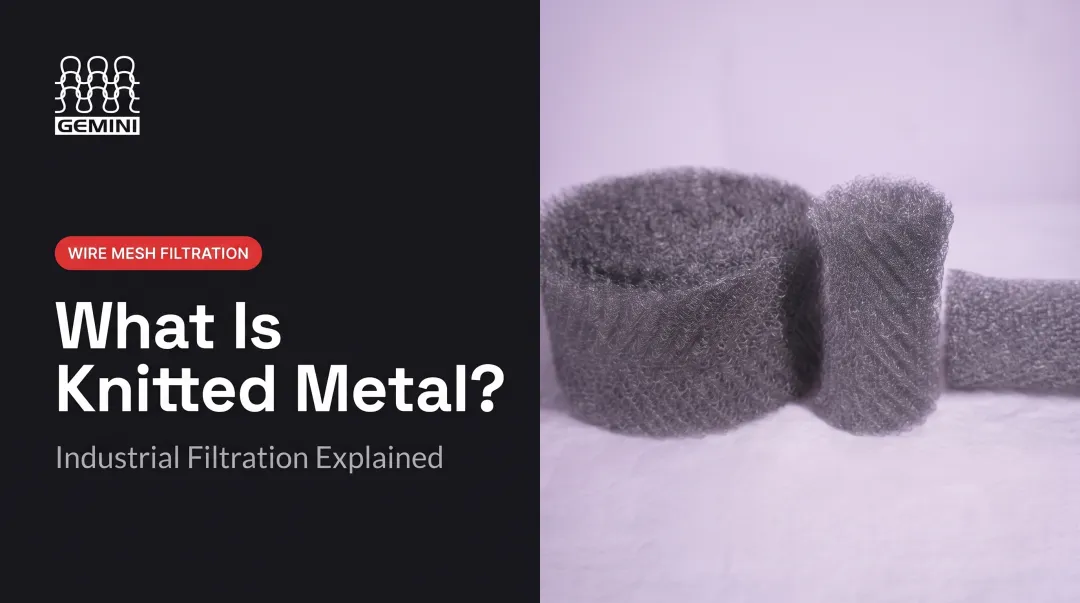
- Knitted mesh — interlocking wire loops that flex and stretch, ideal for irregular surfaces or gaskets
- Woven mesh — a rigid grid of crossed wires, closer to a screen than a fabric
- Expanded copper foil — a solid sheet slit and stretched into a mesh pattern, offering less flexibility but a more uniform surface
Gemini Wiremesh manufactures knitted mesh, not woven. That flexibility matters when grounding runs must conform around irregular components or handle movement.
Copper Grades That Matter
Purity drives conductivity. 99.9% pure copper is the standard grade for grounding mesh and braided connectors, since even small impurities raise resistivity.
- Bare copper — maximum conductivity, best for most soil and indoor conditions
- Tinned copper — same 99.9% base copper with a tin coating for corrosion resistance in harsher environments
Both grades show up in EMI/RFI shielding, static grounding, equipotential bonding, and grounding grids for substations and data centers.
Key Properties That Make Copper Ideal
Copper's conductivity advantage isn't marginal. The table below puts real numbers next to the common alternatives.
| Material | Conductivity (IACS) | Notes |
|---|---|---|
| C11000 copper | 100–101% | Annealed condition, 68°F source |
| Aluminum | ~61% | Varies by alloy grade source |
| Low-alloy steel | 10–18% | Grade-dependent, not a single fixed figure |
| Stainless/high-alloy steel | 2.5–2.9% | Grade-dependent; poor choice where low impedance matters |

Corrosion Resistance and Durability
Copper generally outlasts galvanized steel in most soil conditions, according to CDA's technical guidance on grounding installations. That said, it isn't invincible.
- Highly acidic or alkaline soils can corrode bare copper faster than expected
- Sulfur-bearing carbon backfill can degrade copper over time
- Placing bare copper above galvanized steel structures without protection can cause runoff corrosion of the steel
This is where tinned copper earns its keep. The tin layer adds a protective barrier in soils or environments that would otherwise attack bare copper.
How Copper Grounding Mesh Works & Conducts Electricity
A connected copper mesh grid creates many parallel current paths to earth, spreading fault current or lightning energy across a wide area instead of concentrating it at one point. This is what helps equalize electrical potential across a protected zone.
Copper grounding mesh conducts electricity effectively by design. Copper's low resistivity means current moves through it with minimal energy loss, which is what you want when you need to route dangerous fault current safely to ground.
Mesh Density Affects Performance
Porosity, or void volume, changes how the mesh behaves:
- Lower porosity (denser knit): more copper mass, higher current-carrying capacity, less flexibility
- Higher porosity (open knit): lighter, more flexible, easier to conform to irregular surfaces, but reduced cross-section for current
Gemini Wiremesh produces copper mesh across a density range from near-zero to over 98% void volume. Fabricators can match porosity to the electrical and mechanical demands of a project instead of settling for one standard grade.

Bonding Is Non-Negotiable
Mesh that isn't securely bonded to a grounding electrode or busbar won't perform as designed. A loose mechanical connection creates resistance right where you need none.
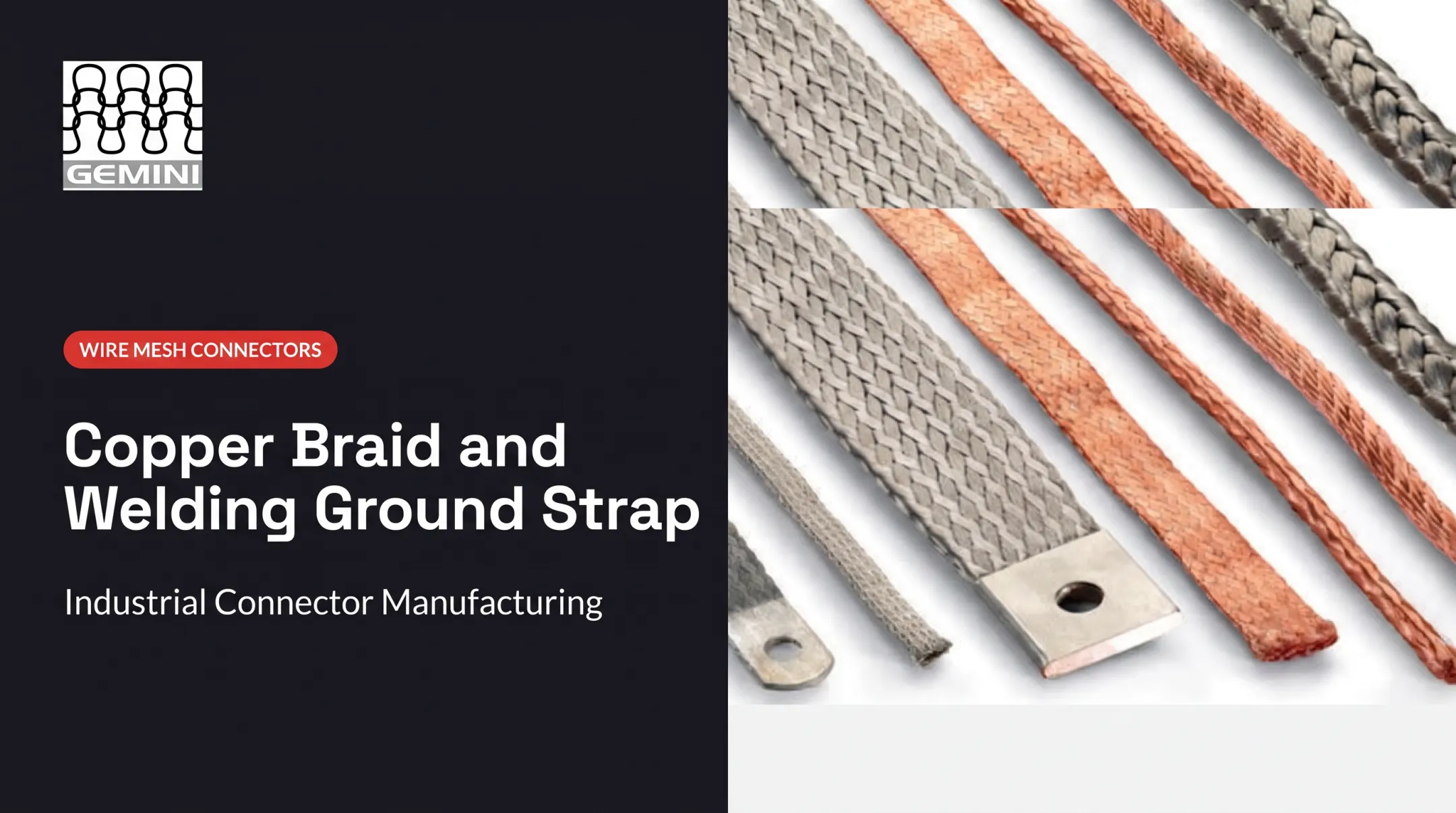
Gemini's tinned copper flat braided connectors, built from 99.9% copper with widths up to 6mm, are commonly used for these bonding connections, offering a flexible, high-surface-area link between mesh and electrode.
An EPRI field test on a 24 ft x 24 ft copper ground grid found that connecting wire mesh reduced open-circuit touch voltage by 83% in wet conditions, according to the EPRI 2009 report. Step voltage was not improved by the same connection.
Mesh grounding solves specific hazards, not every hazard. Design intent matters.
Applications & Industries Using Copper Grounding Mesh
Copper grounding mesh is used wherever fault current or static buildup creates real risk:
- Data centers — supplemental bonding grids (MESH-BN) at 2–4 ft spacing for computer-room grounding
- Telecom facilities — equipotential bonding for sensitive switching equipment
- Oil & gas — static and lightning protection in explosive-atmosphere environments
- Aerospace — EMI shielding and static discharge on airframes and ground equipment
- Electrical substations — ground grids designed to IEEE 80 touch/step voltage limits
- EMI-shielded enclosures — copper mesh as both shield and grounding path

A Specific Niche: Insulators and Connector Assemblies
Manufacturers of electrical insulators, grounding connectors, and EMI-shielded assemblies often embed knitted copper mesh directly into finished products. Shielding knitted wire mesh tapes from Gemini Wiremesh are commonly applied with overlap, then clamped, soldered, or spot-welded into cable jointing and connector assemblies.
Static-Sensitive Environments
Electronics manufacturing and cleanrooms also depend on grounded copper mesh to limit electrostatic discharge (ESD) damage. ESDA's ANSI/ESD S6.1 calls for a common-point ground tied to the equipment grounding conductor; copper mesh is a practical way to build that path, though the standard does not mandate the material.
Installation Best Practices & Compliance Standards
Proper installation is what makes copper grounding mesh perform as designed. NEC Article 250 governs grounding and bonding in the US, establishing continuity requirements and an effective ground-fault current path.
Key compliance points:
- Follow NEC sizing tables: Tables 250.66 and 250.122 dictate grounding conductor sizes based on the connected load.
- Use listed connection methods: Mechanical joints must meet NEC 250.118 requirements for equipment grounding conductors.
- Test continuity periodically: A degraded joint can silently undermine an otherwise sound design.
- Reference IEEE 80 for substations: This standard addresses touch and step voltage limits under fault conditions.

Who Should NOT Use Copper Grounding Mesh
Compliance still fails if site conditions work against copper. Skip it, or proceed with caution, when:
- Soil is highly acidic, alkaline, or contains sulfur-bearing backfill that accelerates corrosion
- Bare copper would sit directly above galvanized steel structures without runoff protection
- Budget constraints for low-risk, non-critical applications favor lower-cost galvanized steel instead
Choosing the Right Copper Grounding Mesh Supplier
Fabricators and OEMs designing grounding components need more than a generic mesh roll. Porosity, stretch capacity, and knit precision all affect how the mesh performs once it's installed.
What to look for in a supplier:
- Density control across a wide void volume range, not a single fixed porosity
- Stretch capacity for conforming to irregular geometries
- Consistent wire diameter and mesh width tolerances, batch to batch
- ISO-certified quality management
A supplier that meets those marks can turn a mesh spec into a reliable production part. Gemini Wiremesh has manufactured knitted wire mesh for over 30 years from its Mumbai facility and holds ISO 9001:2015 certification. The company produces copper mesh with density control from near-zero to over 98% void volume, plus stretching capacity up to 300%. Engineers can dial in the conductivity-to-flexibility ratio a project needs.
For OEMs sourcing at scale, consistent quality across shipments matters as much as the spec sheet. Gemini reports a 99% customer satisfaction rating across more than 10,000 shipments worldwide, with manufacturing and logistics near Jawaharlal Nehru Port (JNPT) in Mumbai for efficient global delivery.
Frequently Asked Questions
Who should not use grounding mesh?
Skip copper mesh in soils with chemistry that attacks copper, and in low-risk jobs where upfront cost is the main driver—galvanized steel is usually the better fit. Always run a soil analysis before specifying bare copper underground.
Does grounding mesh really work?
Yes. Properly installed and bonded copper grounding mesh is a proven, widely used method for dissipating fault current and static electricity. Performance depends heavily on bonding quality and design, not the material alone.
Does grounding mesh conduct electricity?
Yes. Copper mesh is highly conductive and specifically designed to conduct and disperse electrical current to ground because of copper's low electrical resistivity.
What's the difference between copper and steel grounding mesh?
Copper offers significantly higher conductivity (100%+ IACS versus 10–18% for low-alloy steel) and generally better corrosion resistance in most soils. Steel costs less upfront but may need more frequent replacement.
How is copper grounding mesh installed correctly?
Installation requires secure mechanical bonding to grounding electrodes or busbars, correct conductor sizing per NEC tables, and periodic continuity testing. Adherence to NEC Article 250 and, for substations, IEEE 80 is essential.
Can copper grounding mesh be customized for specific projects?
Yes. Manufacturers like Gemini Wiremesh can knit copper mesh to custom density, stretch capacity, wire diameter, and roll width to match unique grounding and bonding requirements.