Introduction
India's steel wire sector is scaling up fast, and US importers and OEMs are paying attention. Wire consumption hit roughly 5.6 million tonnes in FY2023, with demand projected to climb toward 8-9 million tonnes by FY2028, according to CRISIL's industry report.
At the same time, the sector is consolidating. Tata Steel recently absorbed its long-standing subsidiary, Indian Steel and Wire Products Limited (ISWP), into its "One Tata Steel" structure — a signal that bigger, better-capitalized players are reshaping the landscape.
For US buyers, that shift sharpens a real sourcing problem: when to buy commodity volume from the majors, and when specs, alloys, or lead times need a specialist. This article breaks down the industry structure, the major players driving growth, the pressures on smaller manufacturers, and where specialists like Gemini Wiremesh fit when standard wire products fall short.
Key Takeaways
- Wire consumption is projected to grow from 5.6M tonnes (FY2023) to 8-9M tonnes by FY2028
- Tata Steel's ISWP merger signals parents absorbing wire subsidiaries for efficiency
- Organized, capital-intensive producers are gaining ground on fragmented SMEs
- Niche wire mesh applications remain underserved by scale-focused manufacturers
What is Indian Steel and Wire Products Limited (ISWP)?
ISWP was incorporated on December 2, 1935, and operated for nearly nine decades as a Tata Steel subsidiary. Its product range covered TMT rebars, wire rods, wires, welding products, nails, rolled items, and cast products.
That independent chapter has closed.
The 2024 Merger Timeline
- May 2024: Tata Steel acquired 1,873,493 additional equity shares at ₹427 each, raising its stake to 98.61%
- NCLT approvals: National Company Law Tribunal (Mumbai Bench) orders dated November 10, 2023, and December 12, 2023, cleared the amalgamation scheme
- September 1, 2024: The scheme became effective — ISWP was amalgamated into Tata Steel and dissolved without winding up
Buyers should not treat ISWP as an active, independent supplier. Across India’s steel sector, parents are folding wire subsidiaries into core operations to cut redundancy and simplify group structures—this merger fits that pattern.
India's Steel Wire Industry: Scale, Growth and Major Players
CRISIL's data shows India produced 7.4 million tonnes of wire rods in FY2023, growing at an 8.6% CAGR from FY2019 to FY2023. Wire demand itself grew at 6.9% CAGR over that same window.
Who's Producing What
| Producer | Capacity (TPA) | FY2023 Production | Utilization |
|---|---|---|---|
| Tata Wires | 670,000 | 420,000 | 63% |
| Bansal Group | 411,000 | 347,000 | 84% |
| Systematic Wires | 180,000 | 140,000 | 78% |
| HD Wires | 140,400 | 84,000 | 60% |
| Nirmal Wire | 125,000 | 96,000 | 77% |
| Viraj Profiles | 60,000 | 54,000 | 90% |

Source: CRISIL Steel Wires Industry Report
Other notable names include JSPL (a major wire-rod producer), plus Bharat Wire Ropes and Usha Martin, which run captive drawing operations. Bedmutha, DP Wires, Rajratan, Bajrang, and Rimjhim round out the mid-tier field with capacities between 40,000 and 86,400 TPA.
From Fragmented to Formal
CRISIL identifies 60+ large companies plus four fully integrated wire manufacturers. Tata Steel, RINL, SAIL, and JSPL together hold close to half of the wire-rod market. That's a fragmented base at the bottom and consolidated power at the top, a structure slowly tilting further toward organized players as quality benchmarks tighten.
Policy Support Driving the Shift
- Specialty Steel PLI Scheme: ₹6,322 crore outlay for alloy-steel products and steel wires; 4%–6% on incremental sales for five years after the base year
- Steel Import Monitoring System (SIMS): requires advance registration for covered steel imports, with registration numbers valid for 75 days
- Duty rationalization: basic customs duty on ferro-nickel cut from 2.5% to zero; ferrous-scrap duty exemption extended to March 31, 2026

Policy tailwinds have not meant a straight climb in trade. India's wire exports fell 27%, from 0.25 million tonnes in FY2022 to 0.18 million tonnes in FY2023, with the US among the FY2022 destinations. For buyers, capacity, utilization, and quality track record matter more than headline CAGR.
Key Growth Drivers Shaping the Sector
Infrastructure and automotive demand are the two biggest engines. India's FY2024-25 budget allocated ₹11,11,111 crore for capital expenditure, or 3.4% of GDP. That kind of public investment translates directly into demand for standardised, high-tensile wire products used in construction and transport.
Automotive wire demand specifically is expected to grow at 8%-10% CAGR over the coming years, per CRISIL, as vehicle production scales and specifications get stricter.
Technology Is Raising the Bar
Automation, IoT-based monitoring, and real-time quality checks are becoming standard investments among larger producers. The goal: fewer defects, tighter tolerances, and consistency that meets export-grade standards.
Value Beats Volume
There's a clear shift from commodity-grade wire toward value-engineered products: items built to spec rather than sold off a general catalogue. That shift favours specialised manufacturers over mass producers.
Challenges Facing Manufacturers
Not everyone is positioned to ride this growth wave.
Three pressures hit producers hardest:
- Raw material volatility: Coking coal jumped from about $175/tonne to $400/tonne (CRISIL), cutting primary-steel margins from 35%–37% to 24%–26% in one fiscal year
- QCO compliance costs: Steel and Steel Products QCO 2024 requires BIS certification on prestressed-concrete wire, indented wire, and mild-steel wire rods—costs many smaller mills cannot fund
- Workforce gaps: Trained staff for automated, quality-controlled lines are getting harder to hire

Smaller producers absorb these pressures disproportionately. Larger, capitalised players spread compliance and material costs across higher volumes, which is one more reason the industry keeps consolidating.
Where Specialized Wire Mesh Manufacturing Fits In
Here's the gap that large-scale rebar and wire-rod producers don't fill: highly engineered, small-batch products like knitted wire mesh.
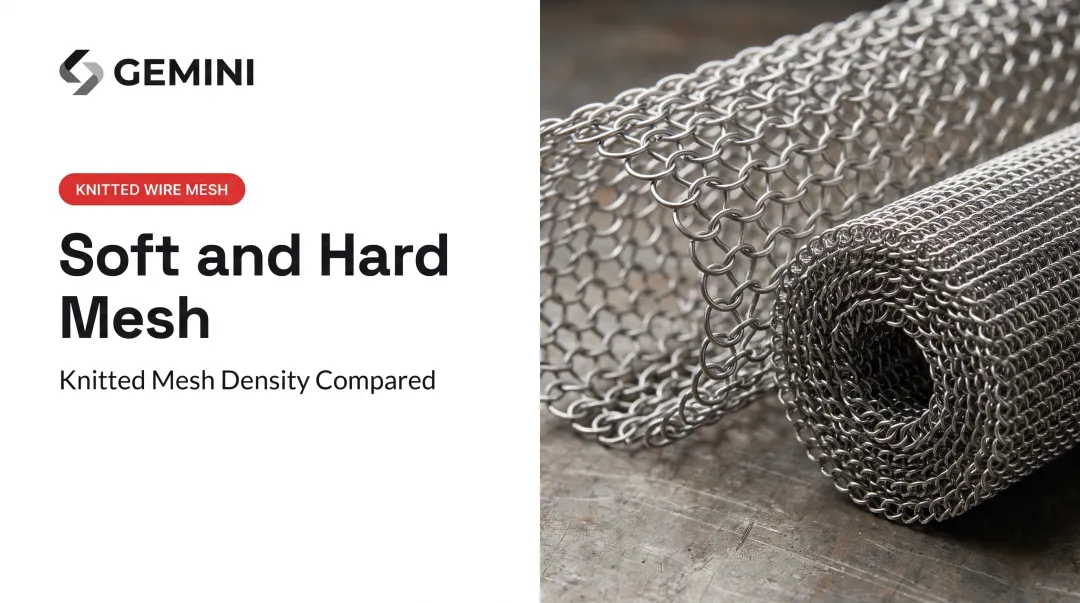
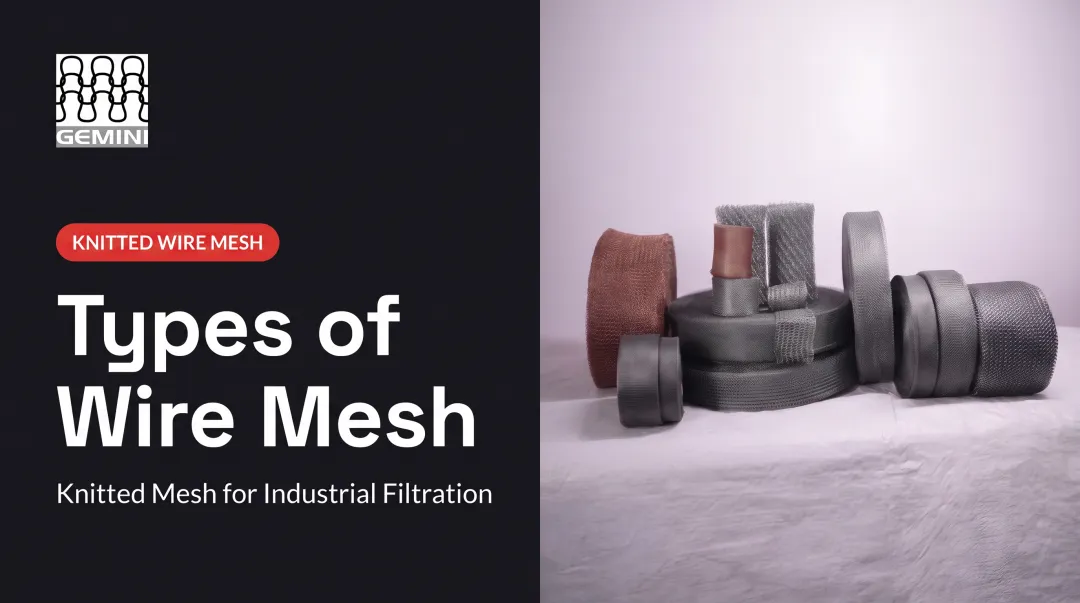
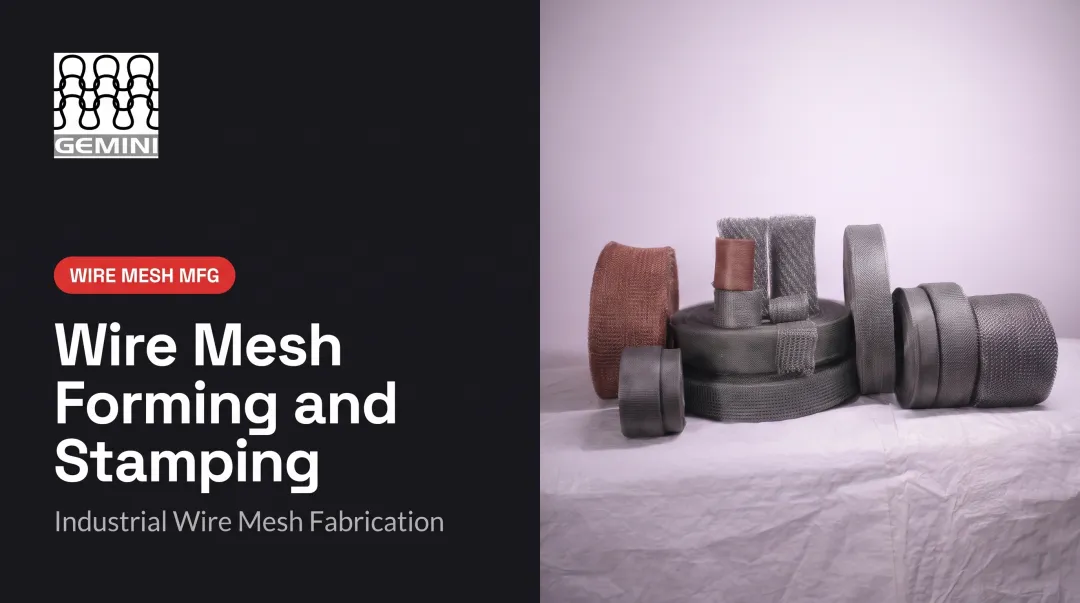
Mass producers are built for volume and standardization. Knitted wire mesh, used in filtration, mist elimination, EMI shielding, and insulation, requires custom porosity, precise wire diameters, and stretch-forming capability that doesn't fit a high-throughput rebar mill's model.
This is the space Gemini Wiremesh operates in.
A Different Kind of Manufacturer
Based in Mumbai and ISO 9001:2015 certified, Gemini Wiremesh has spent over 30 years producing custom knitted wire mesh, demister pads, and compressed mesh components. Its capabilities include:
- Wire thickness: 0.05mm to 0.36mm
- Mesh width: 25mm to 1,000mm
- Porosity control: near 0% to over 98% void volume
- Stretch capacity: up to 300%

That range of customization lets Gemini serve 15+ industries, including oil & gas, chemical processing, pharmaceuticals, automotive, aerospace, electronics, and HVAC, with products that mass mills don't produce economically.
Materials Beyond Standard Steel
Beyond stainless steel, Gemini works with copper, tinned copper, aluminum, and galvanized steel. Polymer options are available where stainless would corrode or contaminate aggressive chemical processes.
Built for Export
Gemini's Mumbai facilities sit close to Jawaharlal Nehru Port Trust (JNPT), one of India's busiest container ports. That proximity, paired with road and air-freight connectivity, helps minimize lead times for international shipments.
The track record backs it up:
- 99% CSAT rating, based on regular customer surveys
- 10,000+ shipments delivered worldwide over three decades
- 100 kg minimum order quantities, structured for B2B buyers who need application-specific specs rather than commodity rolls
For US-based process-equipment fabricators, filtration-unit builders, and EMI-shield manufacturers, this kind of specialized supply chain fills a real void — one that large steel conglomerates, focused on tonnage and standardized grades, aren't chasing.
Frequently Asked Questions
Is Indian Steel and Wire Products Limited (ISWP) still a separate company?
No. ISWP was amalgamated into Tata Steel on September 1, 2024, following NCLT approval, and dissolved without winding up. It no longer operates as a standalone subsidiary.
What products does India's steel wire industry primarily manufacture?
The industry produces TMT rebars, wire rods, general wires, nails, rolled and cast products, plus specialized items like knitted wire mesh for filtration and industrial applications.
How is India's steel wire market expected to grow?
Wire consumption is projected to grow from about 5.6 million metric tons in FY2023 to 8-9 million metric tons by FY2028, driven largely by infrastructure and automotive demand.
Why are large steel companies consolidating their wire subsidiaries?
Consolidation simplifies corporate structures and improves operational efficiency. Tata Steel's "One Tata Steel" strategy, which absorbed ISWP, is a clear example of this efficiency push.
Can US-based companies source specialized wire mesh products from India?
Yes. ISO-certified manufacturers like Gemini Wiremesh export customized knitted wire mesh, demister pads, and related components to global markets, including the United States.
What makes knitted wire mesh different from standard steel wire products?
Knitted wire mesh offers adjustable porosity (up to 98% void volume) and up to 300% stretch capacity, making it suitable for filtration, insulation, and EMI shielding: applications standard structural wire can't support.