Many buyers default to whatever rating a supplier suggests, then discover mid-run that their process needed something tighter — or looser. Micron rating isn't a marketing number. It's tied to nominal versus absolute test methods, media construction, and fluid viscosity, and mixing those up leads directly to clogging or contamination slipping through.
This guide covers what a 100 micron rating actually means, where these socks get used, which materials hold up under real operating conditions, and how to pick the right rating without guesswork.
Key Takeaways
- 100 micron filter socks capture particles around 0.1 mm, a mid-range rating that balances flow and clarity
- Material choice (felt, mesh, polypropylene, or knitted wire) sets flow rate, chemical resistance, and reusability
- Match micron rating to contaminant size, required clarity, and the flow rate your process can accept
- Knitted wire mesh alternatives deliver durability and reuse where disposable felt falls short
What Is a 100 Micron Filter Sock and How Does It Work
A filter sock is a bag-shaped media that liquid flows through, trapping particles as it passes. The "100 micron" label describes the particle size the sock is rated to capture, but that number needs context.
Nominal ratings describe a manufacturer-defined removal percentage. Absolute ratings describe the largest test particle guaranteed not to pass through. The two aren't interchangeable, so any spec sheet should state which one applies, along with the test method and fluid used.
Depth vs. Surface Filtration
Felt socks typically use depth filtration. Liquid travels a tortuous path through the media, trapping particles throughout the material rather than just at the surface. This can hold significantly more contaminant than surface media, which traps particles right at the entry point.
Monofilament mesh is the classic surface-filtration example, with a more clearly defined, uniform pore size.
Micron vs. Mesh: Don't Confuse the Two
This trips up a lot of buyers. 100 mesh is not the same as 100 micron. A 100 mesh screen (based on ASTM E11) works out to roughly 149 microns, according to an industrial mesh-to-micron conversion table.
Mesh count refers to openings per inch; micron rating refers to particle size captured. Specify micron rating directly if that's what your process needs.
For scale: average human hair runs about 70 microns in diameter, so a 100 micron sock catches particles somewhat larger than a strand of hair. Think fine sand, rust flakes, and coarse sediment.

Construction and Flow
Standard filter socks use a ring or band top (often polypropylene) that seats into a housing, with sewn or fused seams running down the sock body. Liquid enters at the top and flows outward through the media wall.
On flow performance, one manufacturer's benchmark lists 100 micron rated at 100 GPM for a standard-size bag, with a note that most applications run at 50 cP or below. Treat that as a reference point, not a guarantee. Always request a flow curve at your actual viscosity and solids load.
Common Applications of 100 Micron Filter Socks
A 100 micron rating shows up across a wide range of industries because it hits a practical middle ground.
Industrial uses:
- Paint and ink production, including pigment handling and resin filtration
- Coatings and surface preparation on washer and etchant lines
- Chemical processing and solvent filtration
- Water treatment as a mid-stage polish before finer filtration
Food, beverage, and pharmaceutical:
- Edible oils, juices, and dairy processing with food-grade, contact-compliant bags
- Pharmaceutical filtration that requires documented material traceability
Pool, spa, and aquaculture:
- Aquaculture recirculating systems for hatchery and RAS water polishing (often 100 or 200 micron)
- Pool and spa systems using similar bag styles, though less standardized
Why 100 Micron Is a Common Starting Point
Tighter ratings (25-50 micron) raise pressure drop and clog faster under heavy particle load. Coarser ratings (200+ micron) let too much through for many clarity needs.
100 micron often becomes the trial point: fine enough to visibly clarify liquid, open enough to avoid constant bag changes. It is not right for every process, but it is a reasonable first test.
Materials Used in Filter Socks and Choosing the Right One
Material choice affects everything from chemical resistance to how many times you can reuse the sock before it degrades.
| Material | Chemical Notes | Typical Temperature Limit |
|---|---|---|
| Polypropylene felt | Good with hydrochloric/sulfuric acid, good with caustic | ~194-212°F (construction-dependent) |
| Polyester felt/mesh | Good with HCl, fair with sulfuric acid, poor with caustic | ~266-374°F (varies by construction) |
| Nylon mesh/felt | Poor with HCl, fair with caustic | ~212-374°F (varies widely by grade) |
| Knitted stainless steel mesh | Broad resistance to acids, caustics, fuels, fumes | Withstands extreme temperatures per manufacturer data |
Felt socks are disposable by design — economical for high-volume, single-pass filtration. But they degrade under heat, aggressive chemistry, or repeated cleaning cycles.
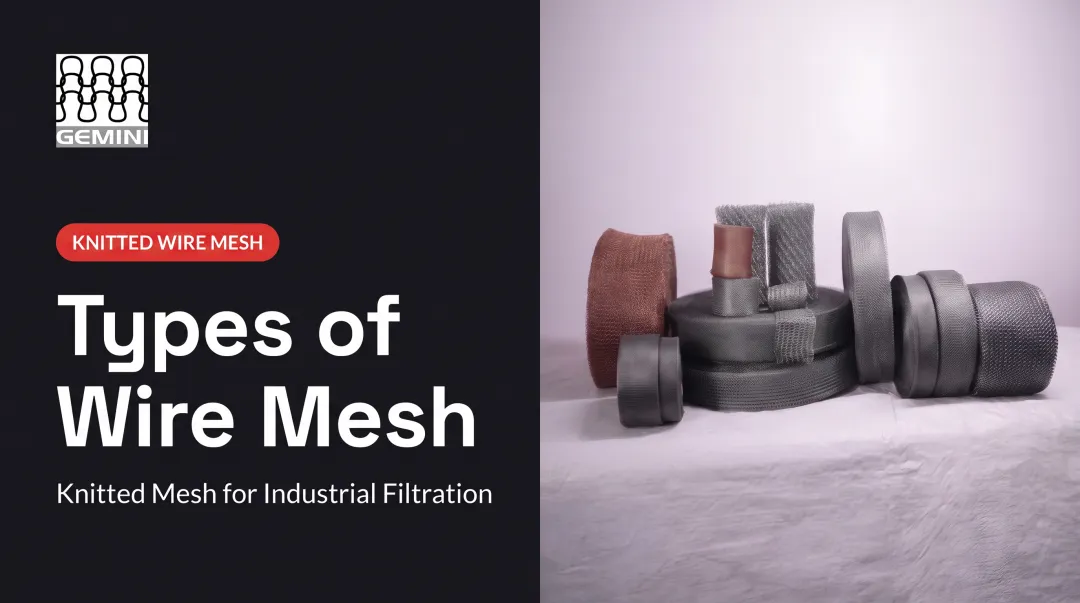
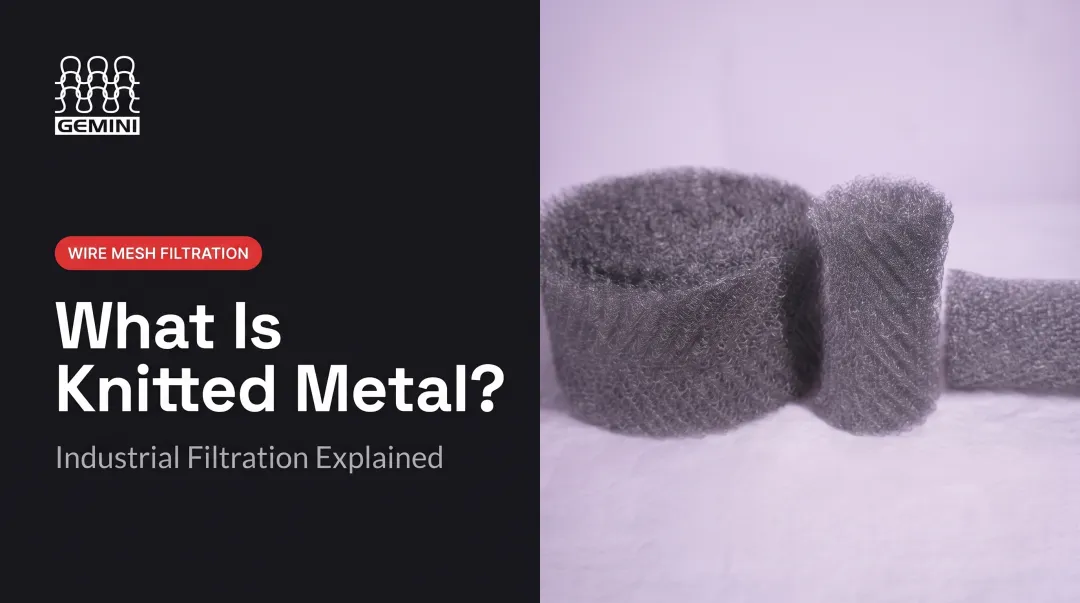
Knitted wire mesh fills that gap. Gemini Wiremesh manufactures knitted stainless steel (SS304/SS316) mesh for filtration builders and OEMs who need a reusable, high-temperature media that holds its structure under shock, vibration, and caustic exposure.
Unlike fixed-micron felt socks, the mesh is customizable across wire diameters from 0.05mm to 0.36mm and porosity up to 98% void volume. Filtration-unit builders can tune particle retention and flow to the application instead of choosing from preset catalog ratings.

Matching Material to Application
- Simple sediment removal, disposable use: polypropylene or polyester felt
- Corrosive chemicals or high heat: stainless steel knitted mesh
- Reusable, long-service filtration builds: knitted wire mesh over disposable felt
Filter Sock Sizing, Reusability, and Maintenance
Filter Sock Sizing
Match diameter, length, and ring style to your bag filter housing. A poor fit leaves gaps at the seal and lets unfiltered fluid bypass the media.
Confirm micron rating, media type, and ring material (plastic flange, steel ring, or equivalent) against the housing OEM specs before you order in bulk. Physical size and micron rating are separate specs—both have to be right.
Are Filter Socks Worth It?
Value depends on your process economics. Disposable felt socks are cheap per unit and need no cleaning labor, so they fit high-throughput, low-value fluid streams.
Reusable mesh options cost more upfront—sometimes 2–3x disposable equivalents—but last many cycles, according to manufacturer guidance on reusable versus disposable filter bags. Cleaning labor and inspection time can wipe out those savings if you do not manage changeout discipline.
How Many Times Can You Reuse Filter Socks?
- Felt socks: Generally treated as single-use; cleaning degrades the depth media structure
- Monofilament mesh: Can be cleaned and reused multiple cycles, with efficiency holding up better than felt
- Knitted wire mesh: Built for durability under heat, vibration, and caustic exposure; exact cycle counts still depend on your contaminant and cleaning process
No universal reuse-count benchmark exists across materials. Validate cycles against your actual fluid and contamination level.
Maintenance Tips
- Watch pressure drop: a common changeout trigger is 15 psid differential
- Inspect for tears at seams and near the ring before each reinstall
- Track cleaning frequency on reusable media and log efficiency after each cycle
- Replace immediately if you see thinning, holes, or seam separation
How to Choose the Right Micron Rating for Your Application
Follow this sequence rather than guessing:
- Identify the contaminant: size, hardness, and stickiness all matter
- Define required clarity: what does the downstream process or spec demand?
- Check flow rate needs: tighter ratings mean more pressure drop and more frequent changeouts
- Test the loosest rating that meets your requirement: don't over-filter if it's not necessary
100 Micron vs. Finer and Coarser Options
Use these ranges as a starting point when matching micron rating to the job:
- 25-50 micron: Fine process solids, edible oil clarification, high-precision polishing; expect faster clogging
- 100 micron: Mid-range clarity with manageable flow, suited to sediment, rust, and coarse particulate
- 200+ micron: Higher flow and lower pressure drop, but lets more through; fine for pre-filtration stages

When standard felt socks can't keep up because of heat, corrosive chemistry, or the need for consistent reuse, knitted wire mesh with adjustable porosity becomes the practical alternative.
Gemini Wiremesh's density control, from near-zero up to 98% void volume, lets OEMs dial in an equivalent filtration profile without being locked into a fixed felt rating.
Frequently Asked Questions
How many microns is a 100 mesh filter sock?
100 mesh and 100 micron are not the same thing. A 100 mesh screen works out to roughly 149 microns based on ASTM E11 standards, so a "100 mesh" sock actually lets larger particles through than a true 100 micron sock.
Are filter socks worth it?
Yes. They protect downstream equipment and improve product clarity at relatively low cost. Disposable vs. reusable depends on your contaminant load and cleaning labor costs.
How many times can you reuse filter socks?
It depends on material. Felt socks are usually single-use, while polyester or nylon monofilament mesh can be cleaned and reused several times. Knitted wire mesh offers the most durability for repeated cycles.
What's the difference between a 100 micron and 50 micron filter sock?
A 50 micron sock captures smaller particles, giving finer clarity, but it also increases pressure drop and clogs faster. A 100 micron sock trades some fineness for better flow and longer service life.
Can filter socks handle hot or corrosive liquids?
Standard felt or polyester socks struggle above certain temperature and chemical thresholds. Polyester tops out around 266-374°F depending on construction, and nylon has acid limitations. Knitted stainless steel mesh (SS316) handles extreme heat, caustics, fuels, and fumes far better.