Many homeowners and builders ask the same question: can you stuff copper mesh into weep holes without blocking drainage? It's a fair concern. Pack a hole too tight, and you've traded a pest problem for a moisture problem.
This guide breaks down what copper mesh actually does in a weep hole, how it stacks up against steel wool and stainless steel alternatives, and what separates a properly installed mesh from one that fails within a year.
Key Takeaways
- Fit copper mesh loosely in weep holes—never pack it tight
- Copper resists corrosion naturally and outlasts plain steel wool in wet cavities
- Dense or low-quality mesh traps moisture and can accelerate wall rot
- Knit consistency and controlled porosity matter more than the material itself
What Are Weep Holes and Why Do They Need Protection?
Weep holes are small gaps built into the mortar joints of brick and stone veneer walls. Building codes require them for a reason: they let water that penetrates the exterior wythe drain back out, and they let air circulate through the cavity behind the brick.
The 2021 International Residential Code sets the baseline in Section R703.8.6:
- Space weep holes no more than 33 inches apart
- Keep openings at least 3/16 inch in diameter
- Place them directly above the flashing
The Brick Industry Association goes further: space them no more than 24 inches apart, preferably as open head joints.

Why Protecting Weep Holes Matters
Leave a weep hole open and problems show up fast:
- Wasps build nests inside the cavity
- Mice squeeze through the opening
- Debris and mortar droppings clog drainage from the outside in
Building Science Corporation's research on brick veneer walls links poor drainage to mold in wall cavities and wood decay at bottom plates in some homes.
Brick absorbs and stores rainwater. When the drainage path fails, that moisture has nowhere to go but into the wall assembly.
Any material you put in a weep hole has one non-negotiable job: it can't compromise drainage or airflow. If it does, you've just created the exact problem you were trying to prevent.
Can You Put Copper Mesh in Weep Holes? (Direct Answer)
Yes. Copper mesh can go in weep holes. The Brick Industry Association's technical guidance specifically allows non-corrosive metal mesh or plastic screens in open head joint weeps. Copper qualifies. But whether it works well depends entirely on the mesh specification and how it's installed.
Knitted vs. Woven: The Difference Matters
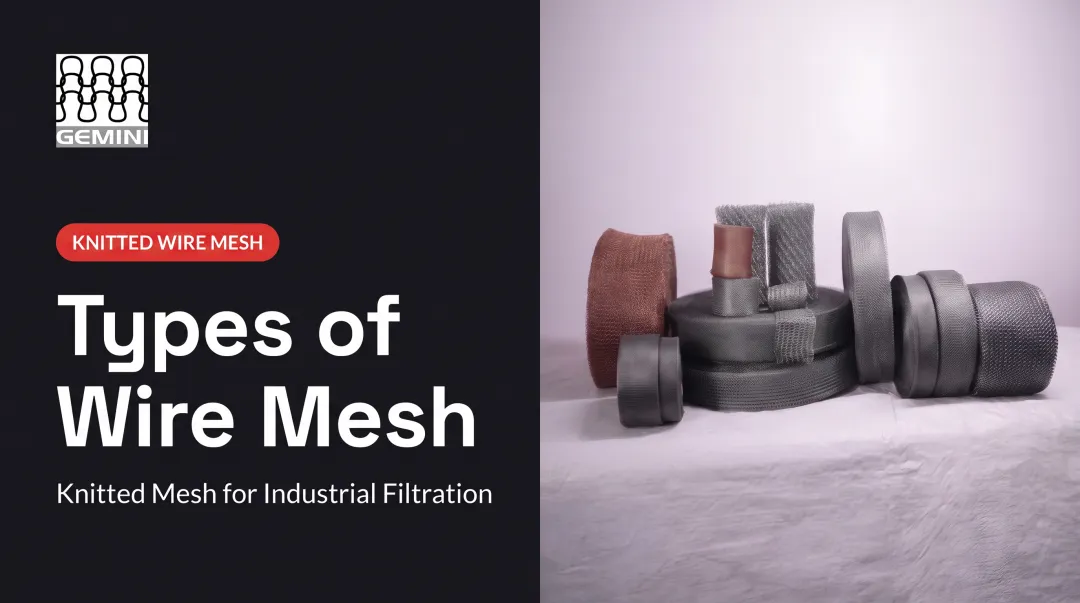
Knitted copper mesh uses interlocking loops. It's flexible, easy to shape into an irregular gap, and can stretch to fill odd-sized openings. Woven mesh uses rigid wires that create fixed, precise openings.
- Knitted mesh: More adaptable to irregular gaps, though loop openings vary once compressed
- Woven mesh: More predictable aperture size, but less forgiving of uneven openings
- For weep holes: Knitted usually fits better because head joints are rarely uniform
Why Copper Over Other Metals
Copper doesn't rust. The Copper Development Association confirms it develops a stable protective patina outdoors rather than corroding away like plain steel. It's also flexible enough to shape into gaps without special tools, which is why manufacturers market copper mesh specifically for pest control and weep hole use.
The Catch: Density Control
Here's where things go wrong. If you jam copper mesh in tight, it stops behaving like a screen and starts behaving like a plug. A densely packed mass:
- Blocks the airflow the weep hole exists to provide
- Traps moisture against the flashing
- Creates conditions for rot and mold over time
Loose-fill copper mesh (the kind sold in retail rolls) relies entirely on the installer getting the density right. Engineered copper mesh inserts, built with structured porosity from the start, remove that guesswork by design.

Copper Mesh vs Other Weep Hole Protection Materials
No single material wins across every category. Here's how the common options compare:
| Material | Filtration | Airflow | Durability | Notes |
|---|---|---|---|---|
| Knitted copper mesh | Good, if not overpacked | Good when loose | Corrosion-resistant | Variable once compressed |
| Steel wool | Fine debris blocked | Poor once wet | Rusts, degrades | Not rated for masonry use |
| Stainless steel mesh | Consistent | Structured | Very high | Rigid, engineered geometry |
| Plastic/vinyl vents | Purpose-built | Published airflow specs | Long-lasting | Not moldable to odd gaps |
A few things stand out from this comparison:
- Stainless steel and engineered inserts outperform loose copper mesh with fixed airflow paths that don't depend on packing density
- Aperture size is the real variable: too coarse lets wasps and mud daubers through; too fine clogs and blocks drainage
- Precision-knitted mesh with controlled porosity delivers pest exclusion and ventilation without the usual hardware-cloth trade-off

Best Practices for Installing Copper Mesh in Weep Holes
Getting this right comes down to restraint. More mesh isn't better mesh.
- Clean the opening first. Clear out mortar droppings and debris before inserting anything.
- Size the mesh to fit, not to fill. Cut a piece that spans the opening without requiring force to insert.
- Never stuff it tight. Water needs to move through the strands, not around a solid plug.
- Secure it loosely if needed. Use corrosion-resistant fasteners to prevent rust streaks on the brick face.
- Inspect twice a year. Check for sagging, clogging, or displacement, especially after storms.
Brick Industry Association (BIA) maintenance guidance recommends seasonal inspections. Use a thin dowel or stiff wire to clear clogs without damaging the flashing behind the mesh.

Common Problems With Copper Mesh in Weep Holes
Most copper mesh failures trace back to one of three issues:
- Dislodgement. Mesh pushed in without any securement can sag, shift, or fall out entirely, leaving the hole exposed again.
- Debris clogging. Loose strands collect dust, pollen, and mortar particles over time, gradually restricting drainage.
- Uneven knitting. Inconsistent porosity across a roll means some sections of mesh are too dense (trapping moisture) while others are too open (letting pests through).
That third point is the one most people overlook. Generic hardware-store copper mesh isn't made to a controlled density spec. One foot might knit tighter than the next, and you won't know until it either clogs or fails.
Choosing High-Quality Knitted Copper Mesh for Weep Hole Applications
For specifiers, distributors, and manufacturers building pest-exclusion or drainage products at scale, the material choice matters less than the manufacturing consistency behind it.
Look for:
- Consistent knit density across the full roll, not just the sample piece
- Controllable porosity, so airflow and drainage requirements can be dialed in per application
- Corrosion-resistant wire suited to sustained moisture exposure
This is where sourcing from a dedicated mesh manufacturer, rather than generic hardware cloth, pays off.
Gemini Wiremesh is an ISO 9001:2015 certified manufacturer producing custom-knitted copper mesh with density control ranging from near-zero up to 98% void volume. That range lets OEMs and fabricators dial in the exact balance between pest exclusion and ventilation their product needs, rather than settling for whatever a retail roll happens to offer.
For companies producing weep hole covers, insect screens, or insulation-facing products at volume, working with a manufacturer that controls knit consistency across bulk orders avoids the batch-to-batch variability common in off-the-shelf mesh rolls.
Gemini's copper mesh is supplied in customer-specified widths and standard 30-meter rolls, with wire diameters from 0.05mm to 0.36mm. That gives fabricators room to match the spec to the application rather than the other way around.

Frequently Asked Questions
Can you put copper mesh in weep holes?
Yes. Copper mesh works well for weep hole protection when it is loosely fitted, not packed tight. Overly dense mesh blocks the drainage and airflow the hole is designed to provide.
Does copper mesh rust or corrode over time?
No, copper doesn't rust the way steel wool does. It forms a stable protective patina instead. Fasteners used to secure the mesh, however, can still corrode if they aren't rated for outdoor exposure.
How is copper mesh different from stainless steel weep hole covers?
Copper mesh is flexible and easy to shape into irregular gaps. Stainless steel weep vents are rigid inserts with fixed airflow paths, so they usually deliver more predictable long-term performance, while copper is easier to adapt on site.
What size mesh should be used in weep holes?
Fine mesh clogs faster with debris; coarse mesh lets pests through. Choose a medium aperture that blocks insects without trapping silt and mortar dust.
Can copper mesh get clogged or fall out of weep holes?
Yes—loosely stuffed mesh without fasteners commonly clogs or works loose. Debris buildup and gradual dislodgement are both preventable with periodic inspection.
How often should weep holes with copper mesh be inspected?
At least twice a year, typically in spring and fall. Homes in high-rainfall or debris-heavy areas (near trees, construction sites, or high pollen zones) should be checked more frequently.